

Dry Mill Biorefinery Process Diagram Courtesy of Al-Corn Clean Fuel.
Elegance is a term used in mathematics and science to describe a solution that’s insightful, efficient, and surprisingly (or deceptively) simple in answering a question. Fuel ethanol production may be thought of as elegant especially given the importance of Mother Nature’s plants in providing their renewable energy.
Biofuel Beginnings
During photosynthesis, green plants convert solar energy to chemical energy as they take up carbon dioxide (CO2) and produce oxygen. Humans learned long ago that something special could be derived from these plants.
Making ethyl alcohol (ethanol) from plants isn’t new. Evidence indicates we’ve been at it for 13,000 years. Different peoples living in different places—Africa, the Americas, Asia, and Europe—likely discovered fermentation independently. They might’ve consumed partially fermented fruit or observed the effects on animals eating rotting berries.
Humans went on to use alcohol in medicines; religion; and as a method of preserving the energy within grain, nuts and fruit. We also discovered it’s an excellent renewable, clean-burning, low-carbon, high-octane fuel.
In the 1820s, Samuel Morey was first to use ethanol as a motor fuel and Nicolaus Otto, inventor of the modern four-cycle internal combustion engine, fueled his machines with this biofuel by the 1860s. Minnesotans have been using ethanol for decades in the ubiquitous 10-percent (E10) blend and as the gasoline alternative E85. This year, our Unleaded 88 E15 sales are hitting all-time records as consumers discover its benefits and competitive price.
Ethanol Production
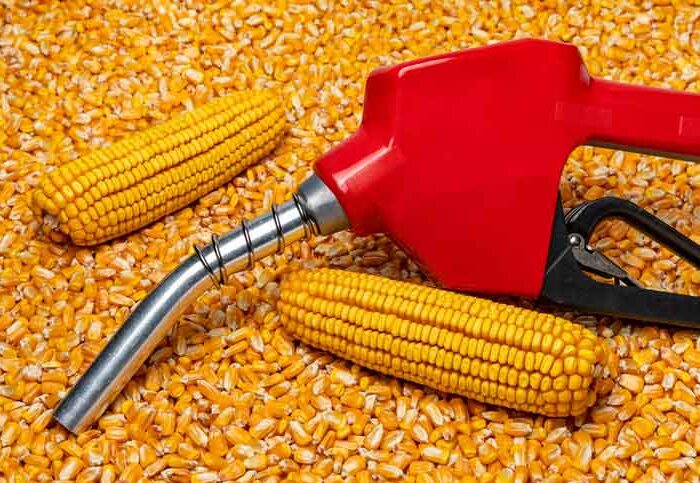
In the United States, the global production leader, ethanol is predominantly made from starch of the field corn kernel. After farmers harvest corn, kernels are delivered to either wet mill or dry mill biorefineries. The vast majority of Minnesota ethanol facilities are dry mills.
Milling, Liquefaction & Sugars
First, kernels are ground into a fine meal. When water, heat, and enzymes are added, the starch of this liquefied mash is broken into complex sugars. The mash is then cooled, and additional enzymes convert the complex sugars into fermentable (simple) sugars.
Fermentation, Distillation & Dehydration
Fermentation begins when yeast is added and converts those simple sugars into ethanol, heat and CO2. Maximum fermentation is achieved at approximately 14% alcohol. This liquidity beer is pumped to distillation towers that strip off water and separate the now-concentrated 190-proof (95%) ethanol from un-fermentable solids—protein, fat and fiber. Molecular sieves dehydrate the alcohol further, removing the last percentages of water.
Co-Products
The remaining material, called stillage, is usually dried into dried distillers grains, a high-value livestock feed. Biorefineries might also extract corn oil for making biodiesel; CO2 used in municipal water treatment and beverage industries; or other co-products.
The kernel’s grind-to-biofuel journey takes about three days.
Did You Know? At biorefineries, finished ethanol is 200-proof (100% alcohol), but federal regulations require that denaturant be added to poison the fuel so it’s undrinkable.