
Recently I heard a guy on talk radio say he occasionally ‘flushes out’ his truck’s engine with a tankful of high octane. That isn’t what octane is. To paraphrase Inigo Montoya, I do not think that word means what he thinks it means.
If you’re old enough to remember eight-track players, you might recall parking a car and turning off the key only to have the engine keep running. For a few painful moments the V8 chugged like a dying beast. Knock, run-on or auto-ignition‒it was all harmful to engines, and higher octane gasoline offered help.
Glad You Asked…
What is octane?
What does higher octane do for my car?
What is compression ratio?
As computerized engine sensors and controls evolved, octane became less an issue and more marketing. Unless you drove high-performance engines, it was typically unnecessary.
Today, gasoline octane rating is making a comeback. Automakers have moved to smaller, higher compression engines as they reduce weight and aim to achieve stringent fuel economy standards. Basically, higher compression translates to more thermal efficiency and work from an equal volume of fuel. Higher octane fuels are recommended to ensure peak performance in higher compression engines.
How does ethanol figure into this?
E10 represents most gasoline sold in the United States. It’s used in all gasoline engines. Regular 87 octane gasoline is produced by blending 10 volume percent ethanol and “sub-octane,” a base gasoline of 84 octane. When the ethanol is added, it boosts the resulting E10 blend by three points to achieve 87. E10 midgrades and premiums are made by combining 10 percent ethanol with base gasolines of higher octane ratings.
E15 is the newest gasoline approved by the U.S. Environmental Protection Agency. It’s approved for all gasoline on-road vehicles built in 2001 and later. But small engines are not yet designed for it. E15 is simply five-percent more ethanol than E10. You may find E15 advertised as Unleaded 88 Midgrade, which refers to its approximate 88.5 octane rating. If sub-octane is the base, addition of 15 percent ethanol raises its rating by about 4.5 points to 88.5, with the exact number dependent on the composition of the gasoline blend stock.
Typically, E15 is marketed at the same price or lower than regular 87 octane gasoline. The pricing and extra octane has helped gain consumer interest.
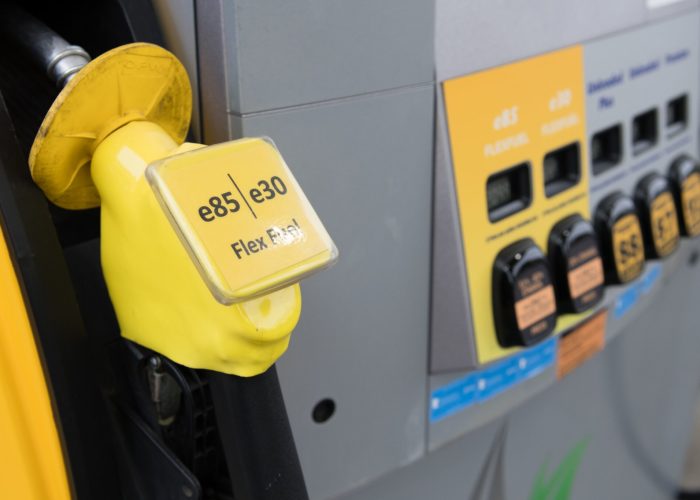
E85 flex fuels are approved for flexible fuel vehicles (FFVs). E85 is a high ethanol content alternative to gasoline. Like gasoline, specifications are adjusted seasonally and geographically to ensure proper performance in hot or cold weather and at low or high altitudes. Approximately 21 million E85-capable FFVs are on American roads and many more are found throughout the world.
Octane rating of E85 and other flex fuel blends varies with ethanol content. Pure ethanol has an estimated octane rating of 114, more than a standard engine utilizes. When optimized for it, ethanol-powered engines achieve impressive performance and horsepower.
What’s next?
Research is underway on high octane low carbon (HOLC) fuels to meet specifications of future engines. Automakers need higher octane fuels. One example, an E25 ethanol blend, would add 7.5 octane points to the base gasoline, while providing substantial reductions in lifecycle emissions. If political hurdles are overcome, HOLC E25 could one day be our fuel of choice, which would both reduce our dependence on petroleum and make engines more fuel efficient.